All About Yin
(and How It's Different from Restorative)
All About Yin Yoga
If you've ever left a yoga class feeling more wound up than when you walked in, Yin Yoga might be the antidote you didn't know you needed.
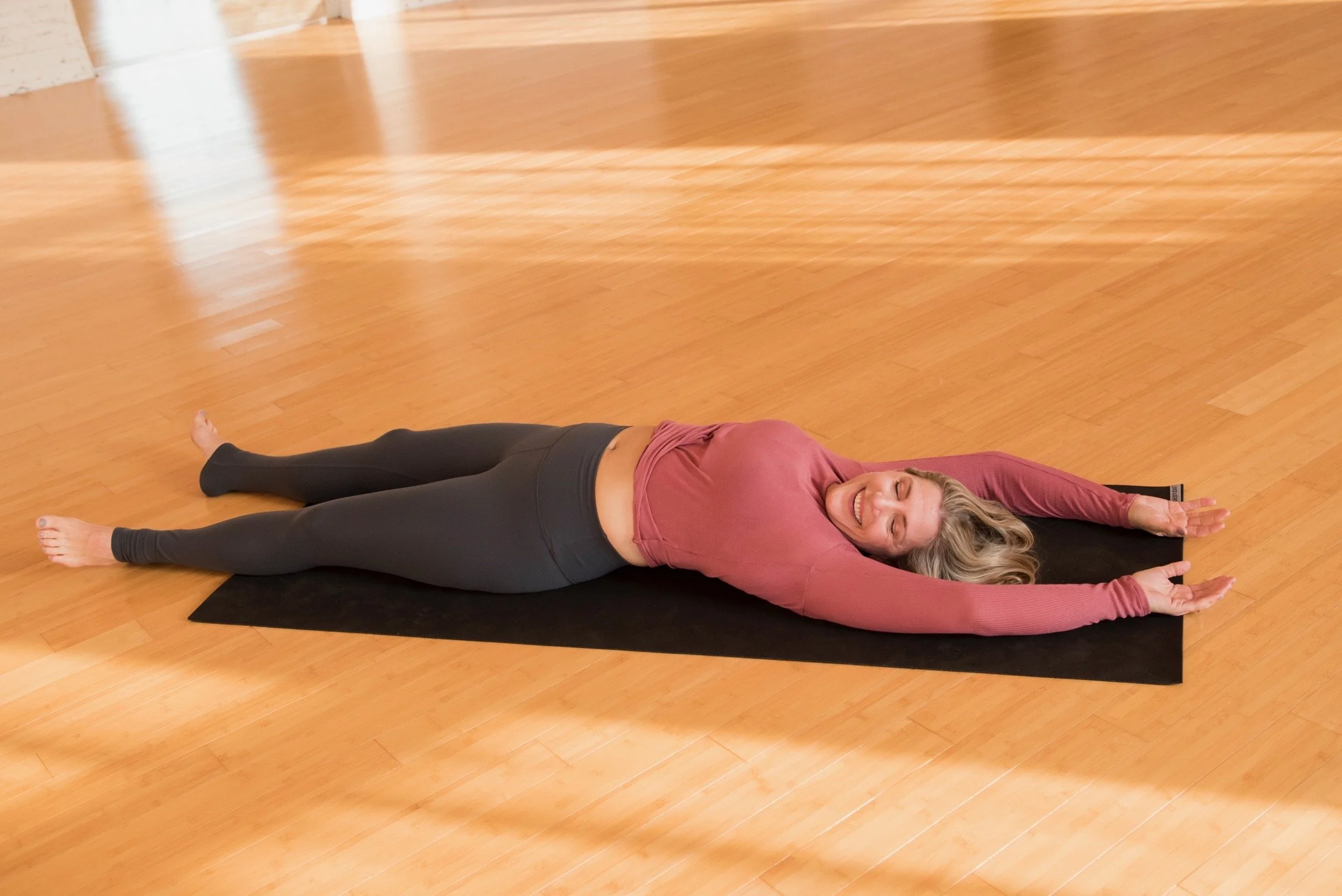
Yin Yoga is a slow, meditative practice in which poses are held for an extended duration, typically three to five minutes or more, sometimes longer. Unlike a vinyasa or power class, where you're moving, building heat, and strengthening muscle, Yin asks you to do the opposite: settle in, let gravity take over, and be still.
That stillness is the whole point. Rather than targeting the muscles, Yin works the connective tissues, tendons, fascia, ligaments, and joint capsules, the parts of the body that don't respond to quick movement but only to time. Held gently and passively, these deeper tissues slowly release, which, over time, can improve joint mobility and flexibility in a way that active stretching often can't reach. In Traditional Chinese Medicine, this same practice is also described as supporting the flow of Qi along the body's meridian pathways, an idea that's been part of Yin's philosophy since its roots in Taoist practice.
What a Class Feels Like
A typical Yin class moves through a small number of poses — often just four to six in an hour — mostly seated or lying down. Props are your friends here: bolsters, blocks, and blankets help support the body so you can fully release into a shape rather than muscle your way into it. Some teachers guide quietly throughout; others leave long stretches of silence so you can turn your attention inward.
The pace is unhurried by design. Because you're not moving from pose to pose, there's nowhere to rush to — which is exactly what makes Yin as much a mental practice as a physical one. It has a way of cultivating mindfulness simply by removing the option to distract yourself with motion.
Who Yin Yoga Is For
Yin is remarkably accessible, which is part of why it's grown so popular over the past several years. It tends to be a great fit for:
Beginners, since there's no need for prior flexibility or yoga experience — though the stillness itself can be its own challenge at first, since the mind isn't used to being without distraction.
Athletes and active people looking for a recovery practice that complements more intense training
Anyone managing stress, since the long holds and stillness activate the parasympathetic nervous system
People with injuries or mobility limitations, when practiced with thoughtful modifications
Longtime yogis looking to deepen a physical practice with more introspective work
One surprising note: long holds can feel intense, even uncomfortable, especially at first. That's normal. Yin isn't about forcing a shape; it's about learning to listen to what your body is telling you in the stillness and easing off when sensation asks you to.
Yin Yoga vs. Restorative Yoga: What's the Difference?
Yin and Restorative are often mentioned in the same breath; both are slow, both involve long holds, and both are a world away from a sweaty vinyasa flow. But they're not the same practice, and understanding the difference can help you choose the right class for what your body actually needs that day.
The Core Difference
Yin Yoga involves applying gentle, sustained pressure to the connective tissue to improve mobility over time. There's a mild sensation involved; you're meant to feel something, even if it's subtle, as the tissue slowly releases.
Restorative Yoga has a different goal entirely: rest. Poses are fully supported by props, so the body does no work at all. There's no edge to lean into, no sensation to breathe through. The aim is pure relaxation and nervous system recovery, more akin to a supported nap than to a stretch.
At a Glance
Yin Yoga: Restorative Yoga:
Improves joint mobility & flexibility. Deep Rest & relaxation
Mild intensity, sensation, target area. Full support, no sensation
Held 3-5 minutes Held -20 minutes
Use props to ease into a stretch. Use props to eliminate all effort
Builds range of motion and mindfulness. Helpful for stress recovery, burnout, illness, and deep fatigue
Which One Should You Choose?
If you're looking to work on flexibility, tight hips, or stiff shoulders, Yin is likely the better fit. If you're depleted, wired, recovering from illness, or just need permission to do nothing for an hour, Restorative is where you want to be. Many students practice both, choosing one or the other depending on what the week has asked of them.
Ready to Try It?
If this sounds like what you've been missing, I'd love to have you join a class at the Jersey Shore. Curious to go deeper? My Yin Teacher Trainingis a wonderful next step, whether you want to teach or simply understand your own practice on a whole new level. Or reach out about private sessions to find the right fit for your body this week.